This month: why the “medium” popcorn is a psychological trap, how your brain reads emotional faces, whether opposites actually attract, and how your brain sees in 3D.
Why Does the “Medium” Popcorn Size Exist?
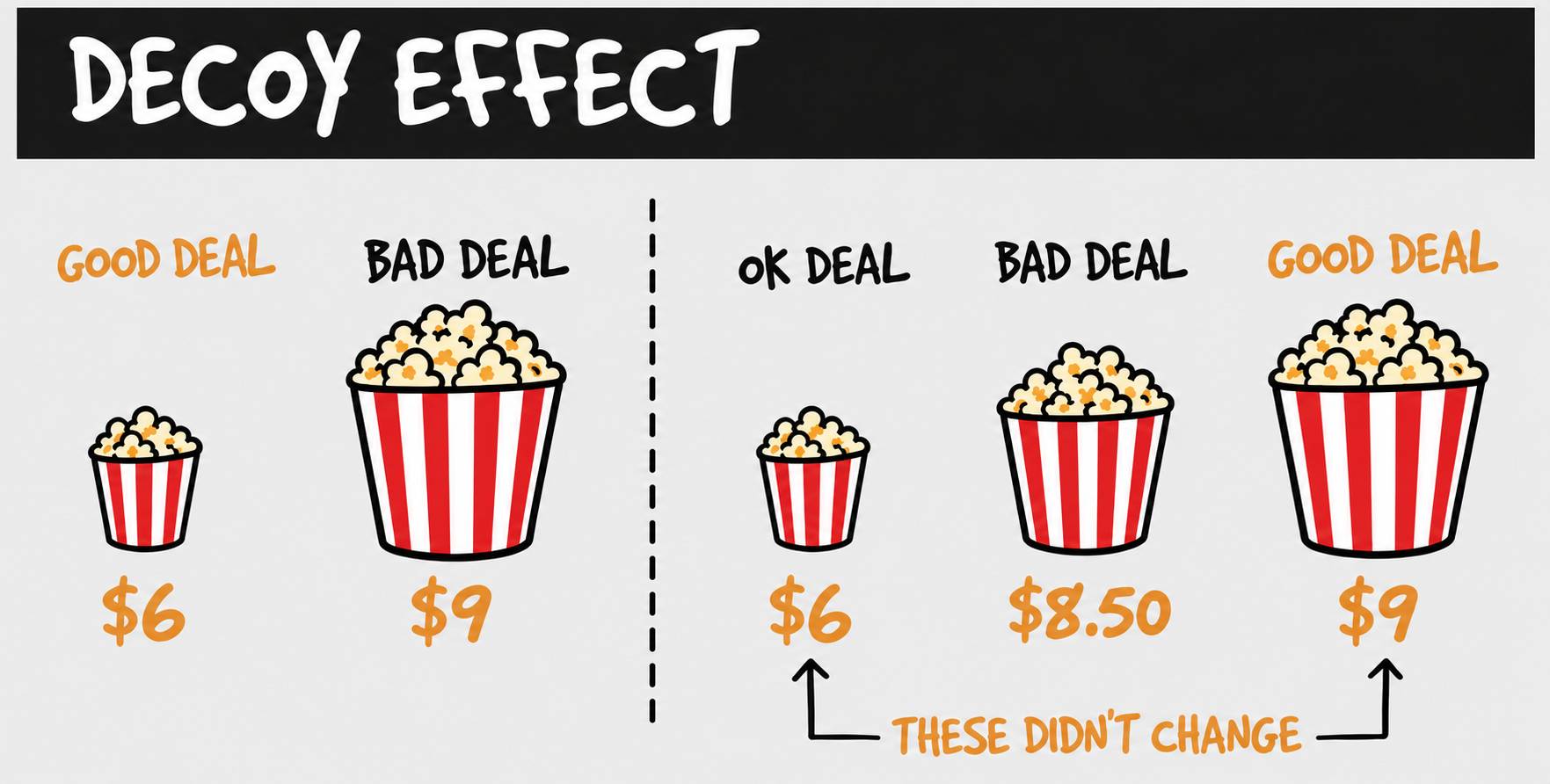
At the movie theater, Small is $6, Medium is $8.50, and Large is $9.00.
Why would anyone buy the Medium?
The Medium isn't meant to sell — it's a Decoy Effect target.
Jumping from a $6 Small to a $9 Large usually makes you pause — $9 is a lot for theater popcorn!
But the moment an $8.50 Medium shows up on the menu, your brain falls for the trick.
Paying just 50 cents more for the Large suddenly feels like a steal — and before you know it, you’ve spent more than you planned.
Which Face Looks More Emotional?
Take a quick look at the two images below. Which face appears more expressive or emotional to you — A or B?
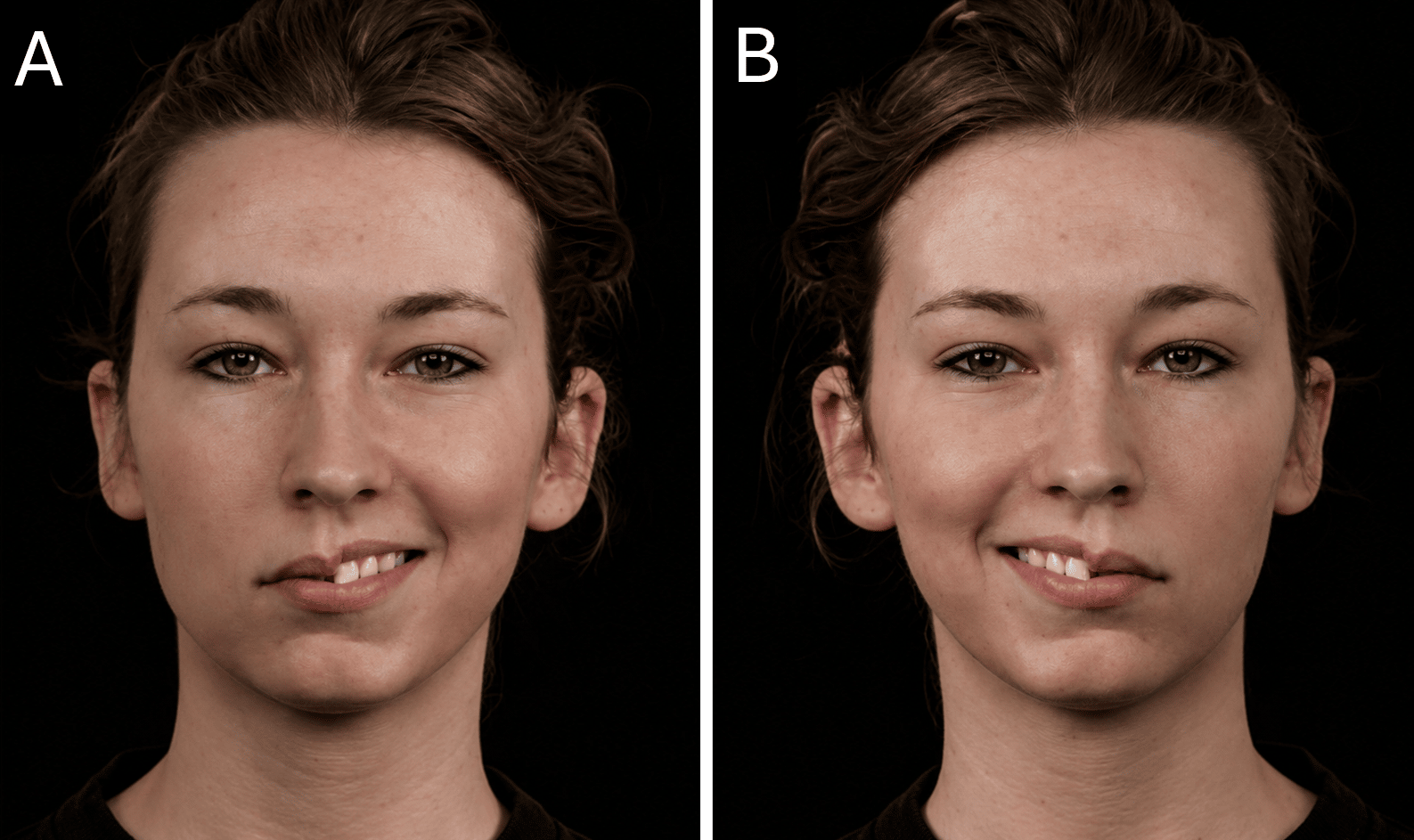
If you picked B, you’re in good company!
Why does this happen? The right hemisphere of your brain plays a larger role in recognizing facial expressions, and information from your left visual field is first processed there.
It’s a simple demonstration of hemispheric lateralization — how the two sides of your brain specialize in different tasks!
FYI — This is known as the Chimeric Face Test. Both faces contain the exact same smiling and neutral halves — they’re simply reversed.
Do Opposites Attract?
Research suggests that similarity — not difference — is usually the stronger basis for attraction.
Shared values, interests, and goals can make relationships feel easier and reduce conflict.
Differences may add excitement or balance, but being opposites doesn’t guarantee a stronger bond.

How Does Your Brain See in 3D?
How does your brain transform two flat retinal images into a three-dimensional world?
In this month’s featured video, we break down:
- Depth perception: How you judge distance and see in 3D
- Binocular cues: Depth information that requires both eyes
- Monocular cues: Depth information available to either eye alone
How Does Your Brain See in 3D?
Explore depth perception, binocular cues, and monocular cues.
Want to follow along? Grab the fill-in-the-blank guided notes for this video.
Enjoyed this issue? Share it with a friend who always buys the Large popcorn or believes opposites attract!

Dr. Steven Kushner
Educator and creator of Psych Explained, where psychology becomes engaging, understandable, and useful. Join a community of over 130,000 psychology learners exploring the science behind how we think, feel, and behave.